


Gynecomastia Surgery Seomyeon Busan | Male Breast Reduction | Urogyn
📍

Seomyeon, Busan

5 min · Seomyeon Station Exit 5

🩺

Board-Certified Urologist

Specialist Men's Clinic

🌐

English Consultations

International Patients Welcome

📅

Same-Day Assessment

WhatsApp or Call to Book

Urogyn Men's Clinic · Seomyeon, Busan

Gynecomastia Surgery
in Seomyeon, Busan

📍 Seomyeon, Busanjin-gu, Busan  |  🚇 Seomyeon Station Exit 5  |  🌐 English OK  |  🔒 Confidential

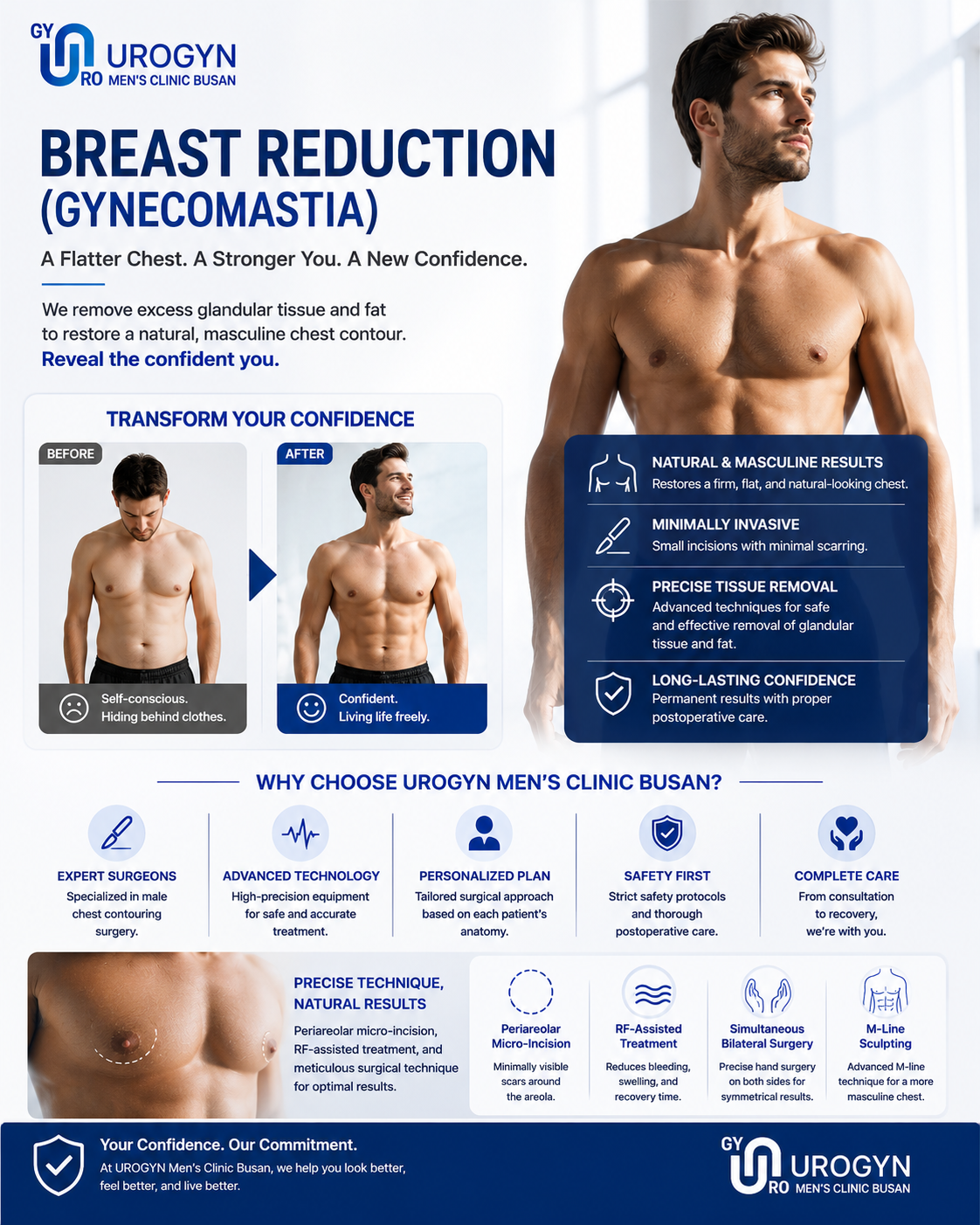
Male breast reduction (gynecomastia) surgery at Urogyn Men's Clinic in Seomyeon, the heart of Busan — combined VASER liposuction and direct gland excision by a board-certified urologist. Grade 1 to Grade 4 gynecomastia. English consultations. Strictly confidential — no shared waiting areas.

Quick Answer

Gynecomastia surgery at Urogyn Seomyeon, BusanVASER liposuction + gland excision, 60-120 min, local anaesthesia with sedation. Grade 1-4 treated. Back to desk work in 3-5 days. English OK. Seomyeon Station Exit 5.

At a Glance
Location Seomyeon, Busan
Procedure 60–120 min
Anaesthesia Local + IV
Discharge Same-day
Desk work 3–5 days
Result Permanent
Language English OK
Book via WhatsApp

Confidential · International patients welcome

About the Condition

What Is Gynecomastia?

Gynecomastia before surgery at Urogyn Busan

Gynecomastia — commonly known as "man boobs" or enlarged male breasts — is a medical condition in which the male chest develops abnormally enlarged breast tissue. It affects an estimated 30-50% of men at some point in their lives and can be caused by hormonal imbalance, puberty, ageing, obesity, medication side effects, or underlying medical conditions. At Urogyn Busan, we treat all four clinical grades of gynecomastia through a combined surgical approach tailored to each patient's anatomy.

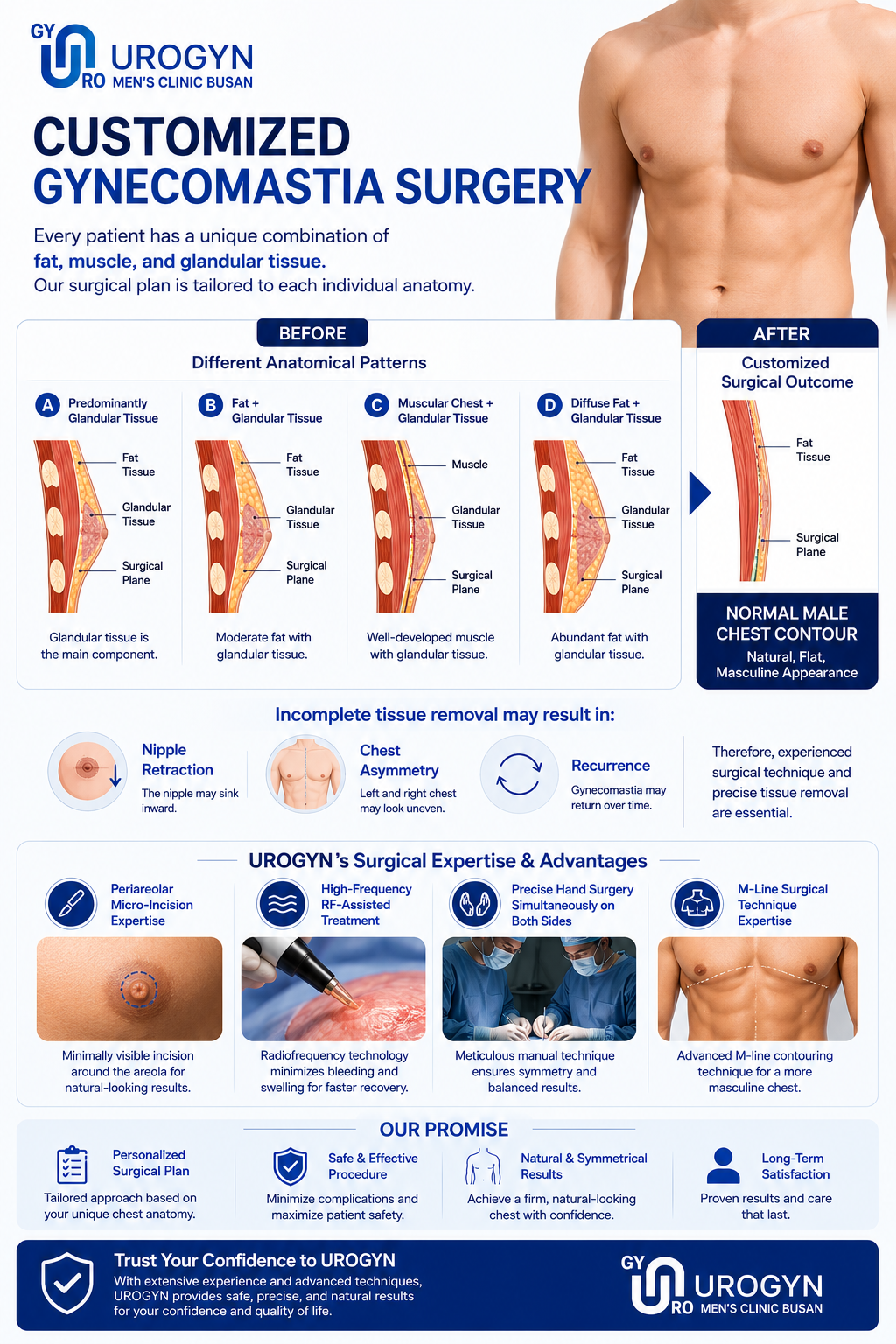
Unlike simple chest fat (pseudogynecomastia) which responds to weight loss and exercise, true gynecomastia involves proliferation of the mammary gland itself — a dense, rubbery tissue located directly beneath the nipple-areolar complex. This tissue does not respond to diet, exercise, or weight loss alone. In fact, even extremely lean patients often retain visible gland tissue that can only be removed surgically. For this reason, gynecomastia is considered a medical-surgical condition rather than a weight-management problem.

Korea is internationally recognised for its expertise in men's aesthetic surgery, with well-established surgical protocols, advanced equipment (VASER, MicroAire), and strict KFDA-regulated standards. At Urogyn Busan, our board-certified urologist performs gynecomastia surgery with specialist knowledge of the male chest anatomy, vascular structures, and hormonal context — a combination rarely found in general aesthetic clinics.

Why a Urologist — Not a General Aesthetic Clinic?

Gynecomastia is fundamentally a condition of male physiology. While general plastic surgery clinics perform the procedure, a board-certified urologist brings specific advantages: understanding of the hormonal axis (testosterone, oestrogen, prolactin) that drives gland formation, familiarity with male-specific anatomy and vascular patterns, and the ability to identify and manage concurrent men's health issues (low testosterone, prostate conditions, metabolic syndrome) that often coexist with gynecomastia. Our clinic exclusively treats men, meaning the entire clinical environment, waiting area, and staff workflow are designed around male patient privacy and comfort.

True Gynecomastia vs Pseudogynecomastia

A critical first step in treatment is correctly classifying the chest enlargement. True gynecomastia involves actual mammary gland tissue — firm, rubbery, and located concentrically beneath the areola. Pseudogynecomastia is simple subcutaneous fat accumulation without gland proliferation, typically associated with being overweight. Most patients actually present with a mixed condition requiring both techniques. At consultation, the urologist performs a physical examination and, when needed, ultrasound to determine the exact gland-to-fat ratio and plan the appropriate surgical approach.

  • True gynecomastia — Firm gland tissue beneath areola. Requires surgical gland excision. Does not respond to weight loss.
  • Pseudogynecomastia — Soft, diffuse fat tissue. Responds to liposuction alone. Often improves with weight loss.
  • Mixed gynecomastia — Most common presentation. Requires both liposuction and gland excision for a natural flat chest contour.
  • Unilateral gynecomastia — Affects only one side. Requires careful contour matching to preserve symmetry.
  • Pubertal gynecomastia — Develops during puberty (age 10-17). Usually resolves spontaneously; surgery considered after age 18 if persistent.
Clinical Grading

The 4 Grades of Gynecomastia

Gynecomastia is clinically graded on a 1-to-4 scale based on the degree of breast enlargement and skin excess. Accurate grading is essential because each grade requires a different surgical approach. At your consultation, the urologist will determine your grade through physical examination and, if needed, chest ultrasound.

Grade 1 gynecomastia - mild puffy nipple
Grade 1
Mild · Puffy Nipple

Small, localised enlargement around the nipple without excess skin. Often described as "puffy nipple". Treated with gland excision alone or minimal liposuction.

Grade 2 gynecomastia - moderate chest enlargement
Grade 2
Moderate · Diffuse

Moderate enlargement of the whole breast area, with blurred boundary into surrounding tissue. No significant skin excess. Requires combined liposuction and gland excision.

Grade 3 gynecomastia - moderate with skin excess
Grade 3
Moderate · With Skin

Moderate-to-severe enlargement with mild skin excess. Visible breast shape in clothing. Requires liposuction, gland excision, and careful skin redraping.

Grade 4 gynecomastia - severe with ptosis
Grade 4
Severe · With Ptosis

Severe enlargement with significant skin excess and downward sagging (ptosis). May require additional skin excision and nipple repositioning for optimal result.

Common Causes

Why Does Gynecomastia Develop?

Gynecomastia arises when the ratio of oestrogen-to-testosterone activity in the breast tissue becomes elevated, stimulating the mammary gland to proliferate. The specific triggers vary widely between patients, and in some cases multiple factors combine. Understanding the cause is important not only for surgical planning but also to prevent recurrence after surgery.

Hormonal Imbalance

The most common driver of gynecomastia is a relative excess of oestrogen activity compared to testosterone. This can occur through reduced testosterone production (hypogonadism, ageing), increased oestrogen conversion (higher body fat increases aromatase enzyme activity, converting testosterone to oestrogen), or medications that interfere with the hormonal axis. Approximately 25-30% of gynecomastia cases involve a measurable hormonal imbalance that can be identified with a blood test.

Obesity and Body Composition

Higher body fat percentage increases aromatase activity, which converts testosterone into oestradiol within the fat tissue itself. This creates a local hormonal environment in the chest that favours gland growth. Many patients notice that even after significant weight loss, the chest tissue remains enlarged — this is because the gland tissue has already proliferated and does not regress with weight loss alone. Surgical removal is the only definitive solution in these cases.

Medications and Substances

A substantial list of medications can trigger gynecomastia as a side effect. These include anabolic steroids (both medical and recreational), certain antidepressants (SSRIs, tricyclics), anti-androgens (used for prostate cancer or hair loss), some blood pressure medications (spironolactone, calcium channel blockers), proton pump inhibitors, and certain recreational drugs. At consultation, we review your complete medication history to identify reversible contributors.

Puberty, Ageing, and Idiopathic Causes

Pubertal gynecomastia affects up to 65% of adolescent boys and usually resolves spontaneously within 1-2 years. Senile gynecomastia develops in men over 50 due to declining testosterone levels. In approximately 25% of adult cases, no specific cause can be identified after thorough evaluation — this is termed idiopathic gynecomastia. Regardless of cause, the surgical approach and expected outcome are similar once the condition is established.

Surgical Techniques

How the Procedure Is Performed

Modern gynecomastia surgery at Urogyn Busan uses a combined approach: VASER ultrasonic liposuction to remove fat and emulsify the gland, followed by direct surgical excision of the residual gland tissue through a small periareolar incision. This technique produces the most natural flat chest contour while minimising visible scarring.

① Pre-Operative Assessment

Comprehensive consultation, chest measurement, photography, blood panel, ECG, and ultrasound if needed. Gynecomastia grade confirmed and surgical plan designed individually.

② Local Anaesthesia + Sedation

IV sedation administered for relaxation. Tumescent local anaesthesia infiltrated throughout the chest, providing complete numbness for 4-6 hours. Patient remains comfortable throughout.

③ VASER Ultrasonic Liposuction

3-4mm entry incisions in axillary and inframammary folds. Ultrasonic energy emulsifies fat and softens gland tissue, allowing thorough removal while preserving surrounding skin, nerves, and vessels.

④ Direct Gland Excision

Single 1cm incision along lower areolar border. Residual mammary gland removed under direct vision. Meticulous haemostasis to prevent haematoma. Closure with fine absorbable sutures.

⑤ Compression Vest Applied

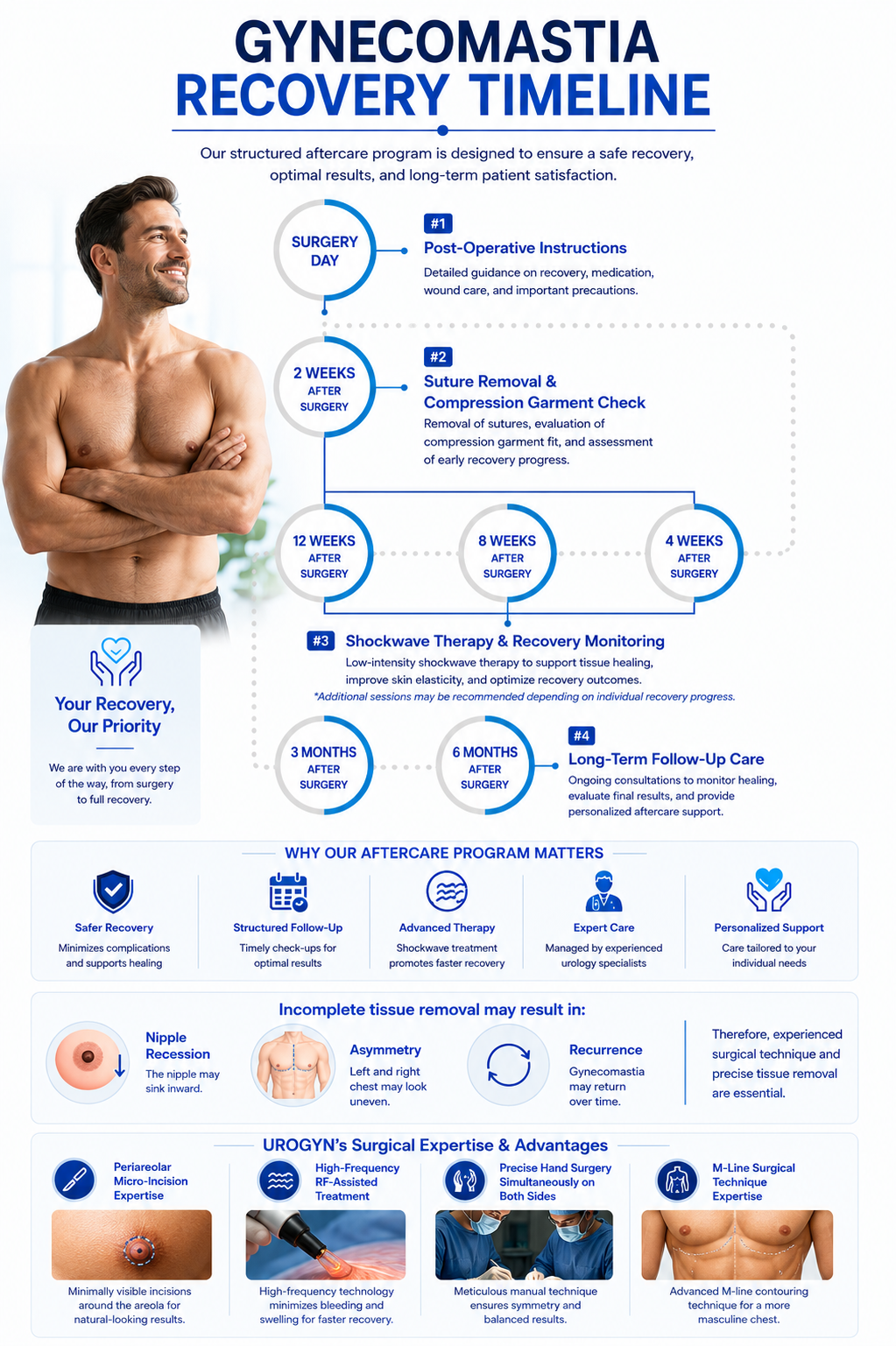
Medical-grade compression vest fitted immediately post-procedure to support healing, reduce swelling, and encourage skin retraction. Worn continuously for 4 weeks except during showering.

⑥ Same-Day Discharge

Recovery monitored for 1-2 hours. Patient discharged with written English aftercare instructions, oral painkillers, antibiotics, and direct contact number for questions during recovery.

⑦ Follow-Up Schedule

Wound check at 5-7 days for suture trimming. Progress review at 4 weeks. Final result assessment at 3 months. Remote follow-up via WhatsApp available throughout.

⑧ Final Result at 3-6 Months

Swelling fully resolves by 3 months. Skin retraction completes by 6 months. The result is permanent — the excised mammary gland does not regenerate. Maintained with stable weight.

Before & After

Visualising the Transformation

The anatomical change after gynecomastia surgery is significant and immediately visible. Below are clinical illustrations showing the typical before-and-after chest profile at each gynecomastia grade. Individual results vary based on initial grade, skin quality, and adherence to recovery protocols.

Grade 1 gynecomastia before surgery - Busan Urogyn
Grade 1 — Before
Grade 2 gynecomastia before surgery - Busan Urogyn
Grade 2 — Before
Grade 3 gynecomastia before surgery - Busan Urogyn
Grade 3 — Before

Most patients achieve a significantly flatter, more masculine chest contour within 3-5 days (initial swelling reduction) with the final result visible at 3-6 months. The surgical scars — typically one 3-4mm liposuction entry point per side and one 1cm periareolar incision — fade to near-invisibility within 6-12 months with proper scar care.

What to Expect in Recovery

The recovery timeline is predictable and generally well-tolerated. Day 1-3: Moderate soreness similar to intense chest workout fatigue, well-controlled with oral painkillers. Day 3-5: Most patients return to desk work. Most swelling resolved. Day 7: Suture trimming (absorbable) at 1-week check. Week 2: Light exercise permitted (walking, light cardio). Week 4: Compression vest can be removed. Gym activities resumed gradually. Week 8-12: Full return to chest workouts and heavy lifting. Final chest contour progressively visible. Month 3-6: Final aesthetic result with fully resolved swelling and skin redraping.

Confidentiality

Privacy & Confidentiality at Urogyn Busan

Independent Consultation Room for gynecomastia patients
Independent Consultation Room

All consultations in fully private rooms. No shared waiting area for sensitive procedures.

Separate Patient Records for gynecomastia
Separate Patient Records

Your records are isolated from other departments. No cross-department data sharing.

1:1 Care System for male breast reduction
1:1 Care System

Dedicated staff member from check-in to discharge. No unnecessary exposure to other patients.

✓ Good Candidates

  • Men aged 18+ with persistent gynecomastia (Grade 1-4) unresponsive to weight loss
  • Men experiencing psychological distress or avoidance of swimming, gym, intimate situations
  • Post-puberty patients where gynecomastia has persisted beyond age 18
  • Men with stable weight (BMI generally <30) for optimal skin retraction
  • International patients seeking specialist treatment with English support
  • Former bodybuilders or athletes with steroid-induced gynecomastia (after discontinuation)

⚠ Caution / Not Recommended

  • Active anabolic steroid or hormone-altering drug use (must discontinue first)
  • Ongoing medical condition driving gynecomastia (liver, kidney, thyroid) — treat primary cause first
  • Pubertal patients under 18 — surgery typically deferred until growth complete
  • Significantly overweight with primarily pseudogynecomastia — weight optimisation first
  • Active breast lumps or suspicious findings — require evaluation before cosmetic surgery
  • Bleeding disorders or anticoagulant use without medical clearance
FAQ

Frequently Asked Questions

Common questions from international patients considering gynecomastia surgery in Busan, Korea.

What is gynecomastia and what causes it?
Gynecomastia is the abnormal enlargement of male breast tissue caused by proliferation of mammary gland tissue and/or accumulation of fat in the chest. Causes include hormonal imbalance (elevated oestrogen or reduced testosterone), puberty, ageing, obesity, steroid use, certain medications (antidepressants, anti-androgens), and some medical conditions affecting the liver, kidneys, or thyroid. In approximately 25% of cases, no specific cause is identified — this is called idiopathic gynecomastia.
Is gynecomastia surgery permanent?
Yes. When performed correctly by a specialist surgeon, gynecomastia surgery produces permanent results. The mammary gland tissue that is surgically excised does not regenerate. However, significant weight gain, steroid use, or certain hormonal changes can affect the remaining chest fat distribution. Maintaining a stable weight and avoiding hormone-altering substances preserves the result indefinitely for most patients.
What is the difference between gynecomastia and pseudogynecomastia?
True gynecomastia involves enlargement of the mammary gland itself — firm tissue that feels rubbery beneath the nipple. Pseudogynecomastia (false gynecomastia) is fat accumulation in the chest area without gland proliferation, typically associated with being overweight. Ultrasound or physical examination distinguishes the two. True gynecomastia requires gland excision; pseudogynecomastia responds to liposuction alone. Most male chest enlargement is a mixed condition requiring both techniques.
How long is the recovery after gynecomastia surgery?
Most patients return to desk work within 3-5 days. A compression vest is worn for 4 weeks to support healing and reduce swelling. Light exercise is permitted at 2 weeks; heavy lifting and chest workouts are restricted for 4-6 weeks. Final aesthetic result is visible at 3-6 months as swelling fully resolves and the skin redrapes over the new chest contour.
Will there be visible scarring?
Scarring is minimal. The liposuction entry points are 3-4mm incisions made in anatomically hidden locations (axillary fold or lower chest). If gland excision is required, a single incision of approximately 1cm is made along the lower border of the areola where it is naturally camouflaged by the pigment transition. Most scars become nearly invisible within 6-12 months with proper scar care.
How much does gynecomastia surgery cost in Busan?
As a non-covered (비급여) aesthetic procedure, pricing varies by gynecomastia grade (1-4), the technique required (liposuction alone, gland excision, or combined), anaesthesia type, and whether skin tightening is added for Grade 4. We do not publish fixed prices as each case is individually assessed. Contact us via WhatsApp for an expected price range based on your photos or description.
Can I travel home soon after gynecomastia surgery?
For Grade 1-2 gynecomastia treated with liposuction alone, most international patients can fly home 3-4 days after surgery. For Grade 3-4 requiring gland excision, we recommend staying in Busan for 5-7 days for the initial wound check. The compression vest must be worn throughout the flight. Remote aftercare via WhatsApp is provided free of charge after you return home.
Is gynecomastia surgery painful?
The procedure itself is performed under local anaesthesia with IV sedation — patients feel no pain during surgery. Postoperative discomfort is mild to moderate for the first 3-5 days, similar to intense chest workout soreness, and well-controlled with oral painkillers. Most patients report that the anticipated pain was significantly worse than the actual experience.

Book Your Gynecomastia
Consultation Today — English OK

Board-certified urologist in Seomyeon, Busan. Private & confidential. Same-day assessment often available.

📍 Seomyeon, Busanjin-gu, Busan 🚇 Seomyeon Station Exit 5 — 5 min walk 🔒 Strictly Confidential 🌐 English · 한국어