TURP Surgery for BPH in Busan, Korea — Gold Standard, 95%+ Effective | $3,704 | Urogyn
Severe BPH Surgery

TURP surgery in Busan, Seomyeon

The gold standard surgical BPH treatment in Seomyeon, Busan. Definitive removal of obstructing prostate tissue — 95%+ effectiveness lasting 10+ years. For severe symptoms when minimally invasive options aren't enough. Transparent USD/KRW pricing: $3,704(₩5M). Personally performed by Dr. Moon Hyeon-chang at our Busan Seomyeon clinic.

Price
$3,704
Procedure
60–90 min
Stay in Busan
7 days
Effectiveness
95%+ · 10+ yr
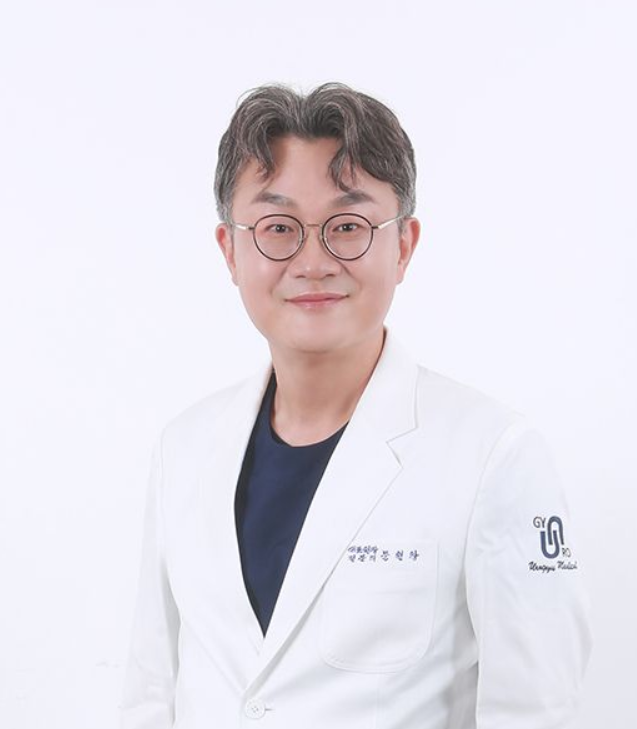
Dr. Moon Hyeon-chang — Board-certified urologist at Urogyn Busan Seomyeon clinic, TURP surgeon
Dr. Moon Hyeon-chang Board-Certified Urologist · TURP Surgeon · 4,000+ BPH Patients · Korean Prostate Society
The 30-second summary
Read time: 8 min
Mechanism
Surgery
Tissue resection (electrocautery)
Total cost
$3,704
vs $15,000+ in US
Sexual function
Changed
75%+ retrograde
Best for
Severe BPH
Any size, definitive solution
Meet Dr. Moon

A message from Dr. Moon on TURP in Seomyeon, Busan.

Before flying to Busan for TURP surgery, learn from Dr. Moon Hyeon-chang about when surgery is necessary vs minimally invasive options at our Seomyeon clinic. 15+ years of urology experience, 4,000+ BPH patients treated, all explained in clear English.

Dr. Moon personally performs every TURP at our Busan Seomyeon practice. TURP is the definitive BPH solution but has trade-offs. We recommend trying minimally invasive options first when appropriate. TURP for severe cases where it's the right answer.

AUA Member EAU Member WAS Member 15+ Years in Busan
🏥
Clinical Consultation Image
[ Insert photo of Dr. Moon during patient consultation or in clinic operating room ]
TURP vs BPH alternatives

TURP vs other BPH treatments at our Busan clinic, compared honestly.

No filter. TURP is the most effective BPH treatment — but the most invasive. Honest comparison with medication, UroLift, and Rezum before your consultation with Dr. Moon.

BPH Medication UroLift Rezum TURP
Price (USD) $30-80/mo $4,444 $5,185
Mechanism Muscle relaxation Permanent implants Water vapor ablation
Effectiveness (IPSS) 60-70% ~70% ~75%
Sexual function ~ Retrograde 30-60% 100% preserved 90%+ preserved
Best for prostate size Any Under 80g Up to 80g+
Severe symptoms ~ Limited ~ Limited Good
Anesthesia None Local + sedation Local + sedation
Procedure time N/A 30-45 min 15-30 min
Hospital stay None Outpatient Outpatient
Catheter post-op N/A Usually no 2-3 days
Recovery time (work) None 1-3 days 1-2 weeks
Result durability Daily forever 5 yr (10-15% retx) 5 yr (10-15% retx)
Stay in Korea 1 day 2-3 days 5 days
When to choose First-line Mild-moderate Moderate, larger
BPH Medication
$30-80/mo
Effectiveness
60-70%
Sexual function
~Retrograde 30-60%
Duration
Daily forever
Best for
First-line
UroLift
$4,444
Effectiveness
~70%
Sexual function
✓ 100% preserved
Procedure
30-45 min outpatient
Best for
Mild-moderate, under 80g
Rezum
$5,185
Effectiveness
~75%
Sexual function
✓ 90%+ preserved
Catheter
2-3 days
Best for
Moderate, larger prostate
Method deep-dives

TURP in detail at Urogyn Seomyeon.

Single-procedure deep-dive at our Busan Seomyeon clinic. Why TURP remains the gold standard for severe BPH — and when it's the right choice. Written by Dr. Moon for international patients.

TURP Candidacy Criteria

Who needs TURP vs minimally invasive options
Free
Assessment
Required test
Full BPH workup
Required test
Pre-op anesthesia
Required test
ECG + blood work
Assessment time
~60 min
TURP necessary
  • Severe symptoms (IPSS 20+)
  • Very large prostate (over 80g)
  • Acute urinary retention
  • Recurrent UTI from incomplete bladder emptying
  • Bladder stones secondary to BPH
  • Kidney impact (high creatinine)
  • Failed UroLift or Rezum
Try alternatives first
  • Mild-moderate symptoms (medication first)
  • Want sexual function preserved (UroLift/Rezum)
  • Prostate under 50g (try UroLift)
  • Cardiac risk for anesthesia (try minimally invasive)
  • Active urinary infection (treat first)
Important TURP should be the LAST resort, not first choice. Try medication, then UroLift or Rezum first when appropriate. Reserve TURP for severe cases where it's definitely needed. Dr. Moon's assessment ensures TURP is right for your situation — not over-prescribed.
Decision guide

Is TURP necessary for your BPH?

Three quick questions. Anonymous. We'll determine if TURP is necessary or if minimally invasive options would work. Final recommendation requires Dr. Moon's full assessment.

Personalized recommendation

Do you need TURP?

Get a personalized assessment to determine if surgery is needed or if less invasive options would suffice.

3 quick questions 60 seconds No email required
Q1.
Expected outcomes

What outcomes to expect after TURP in Busan.

Realistic IPSS improvement expectations after TURP. 95%+ achieve significant symptom relief lasting 10+ years. The definitive BPH solution when minimally invasive options aren't enough.

Day 5 — Catheter removal
Immediate symptom relief
📊
Before/After Diagram
[ Replace with anatomical illustration ]

At catheter removal (Day 4-5 post-TURP), patients experience immediate urinary flow improvement. Strong stream, less straining, complete bladder emptying. IPSS typically drops 12-18 points from baseline. Mild urgency for 1-2 weeks as bladder adjusts.

Month 3 — Full TURP recovery
95%+ definitive symptom relief
📊
Before/After Diagram
[ Replace with anatomical illustration ]

At 3 months post-TURP, full surgical effect is established. 95%+ patients have definitive symptom relief lasting 10+ years. All BPH medications discontinued. Trade-off accepted: 75%+ retrograde ejaculation. End of standard follow-up — annual PSA monitoring thereafter.

Important: Individual TURP results: 95%+ achieve significant symptom relief — the highest of any BPH treatment. Result durability 10+ years, less than 2% need repeat surgery. Sexual function changes: 75%+ retrograde ejaculation (semen into bladder), 5-10% mild ED, orgasm sensation preserved. Trade-off accepted by patients prioritizing definitive symptom relief.
What to expect

The TURP surgery at our Seomyeon clinic, step by step.

The exact 60-90 minute surgical procedure at our Seomyeon, Busan clinic — from hospital admission to discharge.

1
👨‍⚕️
Step 1 Photo

Comprehensive workup

~60 min · same day

IPSS + uroflowmetry + prostate volume measurement. ECG, blood work (CBC, electrolytes, coag), anesthesia consultation. Confirmation: TURP indicated, no alternatives suitable. Hospital admission scheduled for next day.

2
💉
Step 2 Photo

Hospital admission & prep

Evening before

Hospital admission previous evening. Fasting from midnight. Pre-op antibiotics IV. Anesthesia consultation confirmed. Surgical site prep. Surgical consent signed. Catheter prepared.

3
Step 3 Photo

TURP surgical procedure

60–90 min

Spinal or general anesthesia. Resectoscope inserted through urethra. Electrocautery loop systematically resects obstructing adenoma tissue while preserving prostate capsule. Tissue chips removed and sent for pathology. Bleeding controlled with cautery. Three-way catheter placed for continuous bladder irrigation.

4
🛏
Step 4 Photo

Recovery & hospital stay

2–3 nights

Continuous bladder irrigation through catheter (24-48 hrs). IV antibiotics. Pain managed with prescribed medication. Walking encouraged Day 1. Catheter removed Day 3-5 with trial of urination. Hospital discharge once urinating well.

Recovery roadmap

From surgery day to full recovery in Busan.

Realistic TURP recovery timeline. Most international patients fly home Day 7, return to office work in 2-4 weeks, and resume heavy activity at 6 weeks. Effect immediate after catheter removal.

D1

Day 0–1 — Surgery & recovery

First 24 hours

Surgery complete. Hospital recovery with continuous bladder irrigation. Catheter draining initially red, gradually clearing. IV pain medication. Bed rest with assisted walking from Day 1. IV antibiotics continued.

⚠ Hospital admission ⚠ Bladder irrigation ⚠ Catheter in place
D3

Day 2–3 — Hospital recovery

Hospital days

Bladder irrigation gradually decreased. Urine clearing from red to pink to clear. Walking encouraged 3-4 times daily. Switch from IV to oral antibiotics. Light meal advanced as tolerated.

✓ Walking around ward ⚠ Catheter ongoing ⚠ Oral antibiotics
D7

Day 4–5 — Catheter removal

~Day 4-5

Catheter removal at hospital. Trial of urination — should void without retention. If successful, discharge from hospital. Strong urinary flow expected. Mild urgency normal (bladder adjusting). Continue antibiotics 5-7 days.

✓ Catheter out ✓ Hospital discharge ✓ Strong urine flow
W2

Day 5–7 — Return home

End of first week

Most patients fly home Day 7. Strong urinary stream maintained. Some hematuria episodes normal for 2 weeks. Avoid prolonged sitting on flights — walk around every hour. Continue oral antibiotics.

✓ Cleared to fly ⚠ Hematuria possible ⚠ No heavy activity
M1

Week 2–4 — Office work resume

2–4 weeks

Return to desk work Week 2-3. Sexual activity resumes Week 3-4 (now with retrograde ejaculation — semen flows into bladder during orgasm). Avoid heavy lifting, cycling. WhatsApp Dr. Moon IPSS update.

✓ Desk work ✓ Sexual activity (retrograde) ⚠ No heavy lifting
M6

Month 3 — Full TURP recovery

3 months

Full surgical effect established. 95%+ symptom relief. All BPH medications discontinued. Heavy activity resumed (gym, cycling OK after Week 6). Sexual function stable with retrograde ejaculation. Annual PSA monitoring thereafter.

✓ Full recovery ✓ Full activity ✓ Definitive symptom relief
Safety, honestly

Honest TURP safety profile in Busan.

TURP is invasive surgery with definite complications. We don't minimize them at Urogyn Busan Seomyeon. Honest complication rates, sexual function changes, and recovery expectations.

The honest numbers

TURP has known complications including 75%+ retrograde ejaculation — this is the price of definitive treatment. Below is what 15 years of practice and 4,000+ BPH patients have taught us about realistic TURP outcomes at Urogyn Busan.

5–10%
Complications
95%+
Symptom relief
10+ yr
Result durability
  • !
    Retrograde ejaculation (75%+): Expected outcome — semen flows into bladder during orgasm instead of out. Doesn't affect orgasm sensation. Causes infertility (rare consideration in TURP age range).
  • !
    Bleeding (2-5%): Most common acute complication. Continuous bladder irrigation post-op manages this. Rare cases (1-2%) require blood transfusion. Persistent hematuria can occur up to 4 weeks.
  • !
    Erectile dysfunction (5-10%): Some patients develop mild new-onset ED. Usually resolves at 6-12 months. PDE5 inhibitors (Viagra, Cialis) help if persistent.
  • !
    Urethral stricture (2-5%): Scarring of urethra from instrumentation. Can develop months/years later. Treatment: endoscopic dilatation or revision surgery.
  • !
    Urinary incontinence (1-2%): Mild stress incontinence rare. Severe incontinence very rare (under 0.5%). Pelvic floor exercises usually resolve mild cases.
  • !
    TUR syndrome (rare, under 1%): Modern bipolar TURP nearly eliminates this risk. Was a serious complication with monopolar TURP — caused by fluid absorption. Modern technique very safe.
  • !
    Bladder neck contracture (1-3%): Late complication — scar tissue narrows bladder neck. Symptoms: weakening urinary stream months after improvement. Treatment: endoscopic incision.
  • Coverage: All Urogyn procedures covered by Korean medical malpractice insurance (KMA-affiliated). Hospital facility accreditation verified. Anesthesia coverage included. Documentation provided pre-procedure on request.
Patient voices

Hear from men who chose Busan for TURP.

Two international patients share their experience with TURP at Urogyn Busan, Seomyeon — why they chose definitive surgery over minimally invasive options.

🏥
Clinical Image — TURP Surgery
[ Insert clinical photo ]

"Tried medication 5 years, then UroLift — neither enough. 110g prostate needed TURP. Busan saved me $15K vs US. Three years later, normal urination, no regrets."

Henry, 71
🇺🇸 United States · TURP · Busan, 2023
🏥
Clinical Image — Surgical Recovery
[ Insert clinical photo ]

"Acute urinary retention twice, catheter dependent. TURP was the only option. Busan provided excellent surgical care at 50% of UK private price. Catheter-free for 2 years now."

Klaus, 68
🇩🇪 Germany · TURP · Busan, 2023
Questions men ask

What men ask before flying to Busan for TURP.

TURP (Transurethral Resection of the Prostate) is the gold standard surgical BPH treatment performed since the 1930s. A specialized cystoscope (resectoscope) is inserted through the urethra. An electrocautery loop systematically shaves off the obstructing prostate tissue (adenoma) in small pieces while preserving the prostate capsule. Tissue is irrigated out of the bladder. The procedure takes 60-90 minutes under spinal or general anesthesia.

Three reasons: (1) Highest effectiveness — 95%+ symptom relief vs UroLift 70%, Rezum 75%, medication 60-70%. (2) Longest durability — 10+ years vs UroLift/Rezum 5 years. (3) Works on any prostate size up to 100g+. Modern bipolar TURP has reduced complications significantly. The trade-off is 75%+ retrograde ejaculation, which is why minimally invasive options are tried first.

During TURP, the bladder neck is opened wider to remove prostate tissue. After surgery, semen flows backward into the bladder during orgasm instead of forward out of the penis. The orgasm sensation is unchanged. The semen is harmlessly excreted with next urination ("cloudy urine"). Doesn't cause health problems but causes infertility (rarely a concern in TURP age range — typically over 60).

TURP becomes appropriate for: severe BPH symptoms (IPSS 20+) not responding to minimally invasive options, very large prostates (over 80g) where UroLift/Rezum aren't optimal, BPH complications (acute urinary retention, recurrent UTI, bladder stones, kidney impact), failure of UroLift or Rezum. TURP is the LAST resort, not first choice — minimally invasive options always tried first when feasible.

Counterintuitive but true: TURP equipment (resectoscope, electrocautery generator) is standard urology equipment with no per-case device cost. UroLift implants and Rezum needle are expensive disposables. At Urogyn Busan: TURP $3,704 vs UroLift $4,444 vs Rezum $5,185. TURP is invasive but cheaper because no special devices required. In the US, TURP costs $15,000+ due to hospital and anesthesia markups.

2-3 nights at Urogyn-affiliated hospital. Day 1: surgery, IV antibiotics, bladder irrigation. Day 2-3: irrigation continues, catheter remains, walking encouraged. Day 4-5: catheter removed, trial of urination, discharge if successful. Total stay in Busan: 7 days (1 day consultation + 2-3 night hospital + 2-3 day hotel recovery before flight).

Mostly no, but 5-10% experience some erection changes. Pre-existing ED won't improve. New-onset ED in 5-10% (usually mild, usually temporary). Erection mechanism (corpora cavernosa, dorsal nerves) is not in the surgical field, so significant ED is uncommon. PDE5 inhibitors (Viagra, Cialis) effective if needed.

Less than 2% of patients need repeat TURP within 10 years. Highest durability of any BPH treatment. Compare: UroLift 10-15% retreatment at 5 years, Rezum 10-15% retreatment at 5 years, medication daily forever. After successful TURP, most patients have permanent symptom relief.

TURP requires anesthesia (spinal preferred for cardiac patients, lower risk than general). Pre-op cardiac assessment includes ECG, blood work, anesthesia consultation. Patients with controlled cardiac conditions (post-stent, well-controlled BP) can safely undergo TURP. Coordination with cardiologist for blood thinner management. Severe heart failure or active angina: consider minimally invasive options instead.

Most blood thinners stopped 7-10 days before TURP. Aspirin 81mg sometimes continued depending on cardiac risk. Warfarin/DOACs require coordination with cardiologist. Bridging therapy with low-molecular-weight heparin used for high cardiac risk patients. Restart blood thinners typically 1-2 weeks post-op when bleeding risk is reduced.

Credit card, bank transfer, or crypto accepted. Card descriptor reads "Busan Health Clinic" — not "TURP" or "BPH." Payment: 50% deposit / 50% on admission day. Itemized English receipts for insurance reimbursement (most plans cover TURP — international medical insurance often pays significant portion).

Four reasons: (1) 70-80% lower cost than US ($3,704 vs $15,000+), 50% lower than UK private, (2) Dr. Moon's 4,000+ BPH patient experience and Korean Prostate Society membership, (3) Modern bipolar TURP with low TUR syndrome risk, (4) Combine with 7-day Busan stay during recovery. International patients from US, Europe, Middle East regularly choose Busan for TURP specifically.

Your next step

Message Dr. Moon in Seomyeon, Busan before booking your TURP.

Free, no commitment. Share your IPSS score, prostate volume, and prior treatment history via WhatsApp — Dr. Moon will determine if TURP is necessary or if minimally invasive options would work. Total cost: $3,704 (₩5M) all-inclusive for our Seomyeon, Busan clinic.

15+
Years
4,000+
BPH patients
40+
Countries served
< 1%
Complication rate